Components audited
A comprehensive audit exposed duplication, inconsistencies, and opportunities to consolidate the product experience.


Unifying a global AdTech platform through a modern Design System.
Integral Ad Science needed a stronger product foundation to support a complex platform, evolving brand, and growing product organization. We helped transform fragmented interface patterns into MORTON, a shared Design System designed to improve consistency, collaboration, and product delivery.
A comprehensive audit exposed duplication, inconsistencies, and opportunities to consolidate the product experience.
Shared foundations and reusable patterns helped create a more coherent experience across the platform.
A stronger shared system enabled teams to design and deliver product experiences more efficiently.
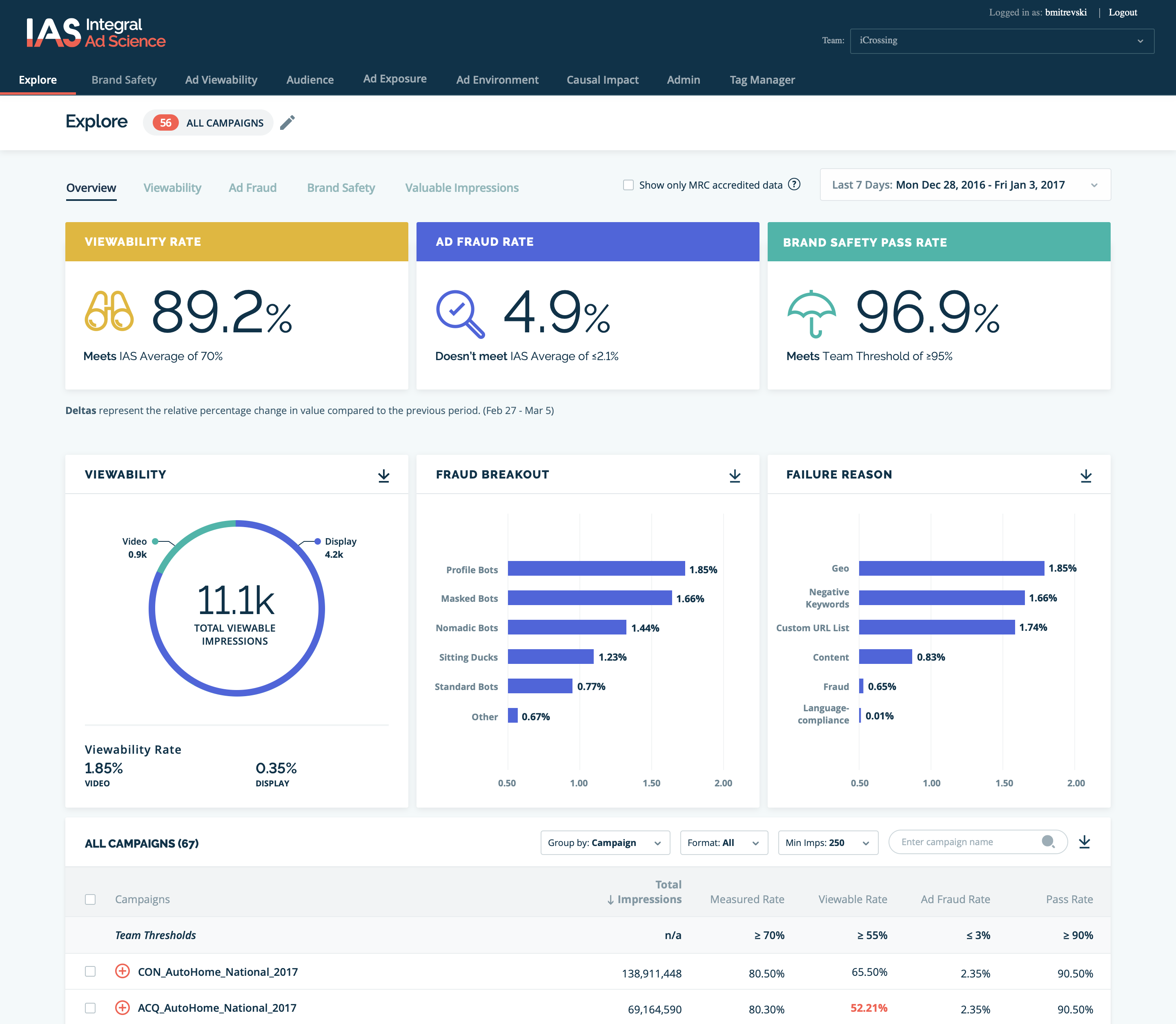
As Integral Ad Science evolved, its product experience had accumulated patterns, components, and implementation decisions across different areas of the platform.
The result was increasing fragmentation. Similar interactions were being solved in different ways, inconsistencies were becoming more visible, and Design and Engineering lacked a shared foundation for building and evolving the product. At the same time, IAS was undergoing a broader brand evolution.
Similar product problems were being solved through different interface patterns.
Overlapping solutions increased maintenance and made consistency harder to sustain.
Design and Engineering needed stronger shared standards for translating patterns into product.
The new visual direction needed a systematic way to extend into a complex digital product.
The goal wasn't simply to redesign individual screens or create a new component library.
It was to establish a shared foundation that could connect the evolving IAS brand with the realities of a large digital product, giving Design, Product, and Engineering a common language for making decisions and building experiences.
That meant understanding the existing ecosystem first, identifying what should remain, what needed to evolve, and where standardization could create the greatest impact.
From fragmented patterns to a shared system.
We reviewed the existing product experience and component landscape to understand recurring patterns, inconsistencies, duplication, and implementation gaps.
100+ components auditedWe translated the evolving IAS visual language into foundations that could work systematically across a complex product environment.
Those foundations became a reusable component architecture designed to support both current product needs and future evolution.
The system created a shared reference point between designers and engineers, reducing ambiguity and helping teams make more consistent implementation decisions.
Documentation, usage guidance, ownership, and contribution practices helped turn the component library into an operational Design System teams could continue evolving.
MORTON became the shared product foundation for Integral Ad Science—connecting visual foundations, reusable components, documentation, and implementation guidance into one coherent system. Rather than prescribing a static set of UI elements, the system was designed to give teams enough structure to create consistent experiences while continuing to support new product requirements.
Color · Typography · Spacing · Layout · Interaction principles
Reusable interface patterns designed around recurring product needs.
Clear guidance around behavior, usage, implementation, and appropriate variation.
Ownership and contribution practices to help the system evolve without returning to fragmentation.
The system only mattered if teams could use it.
Shared foundations and reusable patterns.
A common language for designing and implementing product.
More consistent experiences across the Integral Ad Science platform.
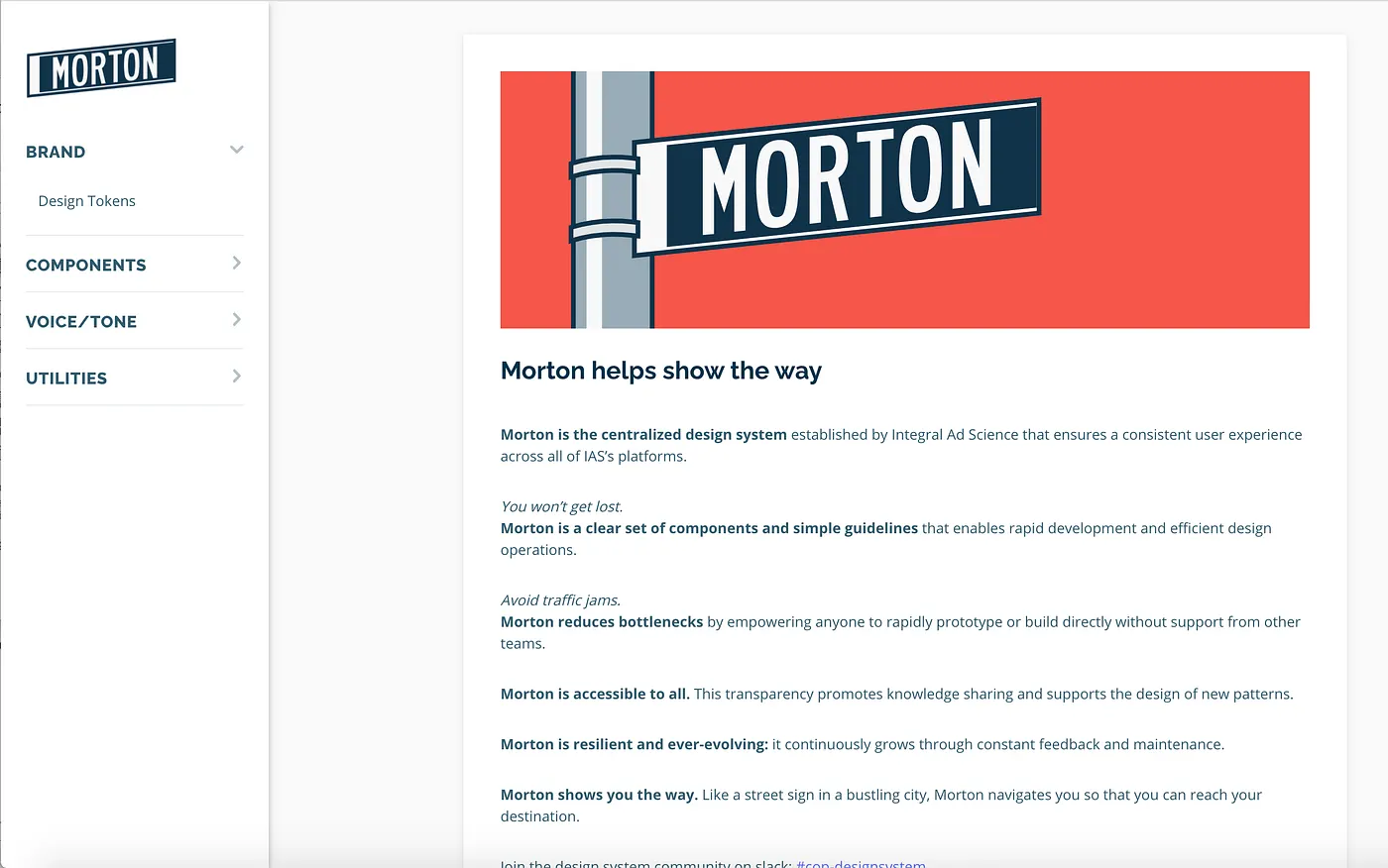
For MORTON to remain useful, teams needed a way to maintain it, contribute to it, and make decisions as new product needs emerged. The engagement therefore extended beyond component creation into the practices required to sustain the system over time.
Clearer responsibility for maintaining and evolving the system.
Processes for introducing new patterns without creating unnecessary duplication.
Shared guidance that reduced reliance on institutional knowledge.
A stronger connection between system decisions and the teams implementing them.
Design and Engineering gained a common foundation for building and evolving the product together.
“They took a fragmented Design System and quickly transformed it into a scalable foundation. Their ability to align teams, establish clarity, and drive meaningful progress made them an invaluable partner.”
Senior Product Design Director at Integral Ad Science
Understand where your Design System, product foundations, and operating model stand and identify the capabilities that could have the greatest impact.